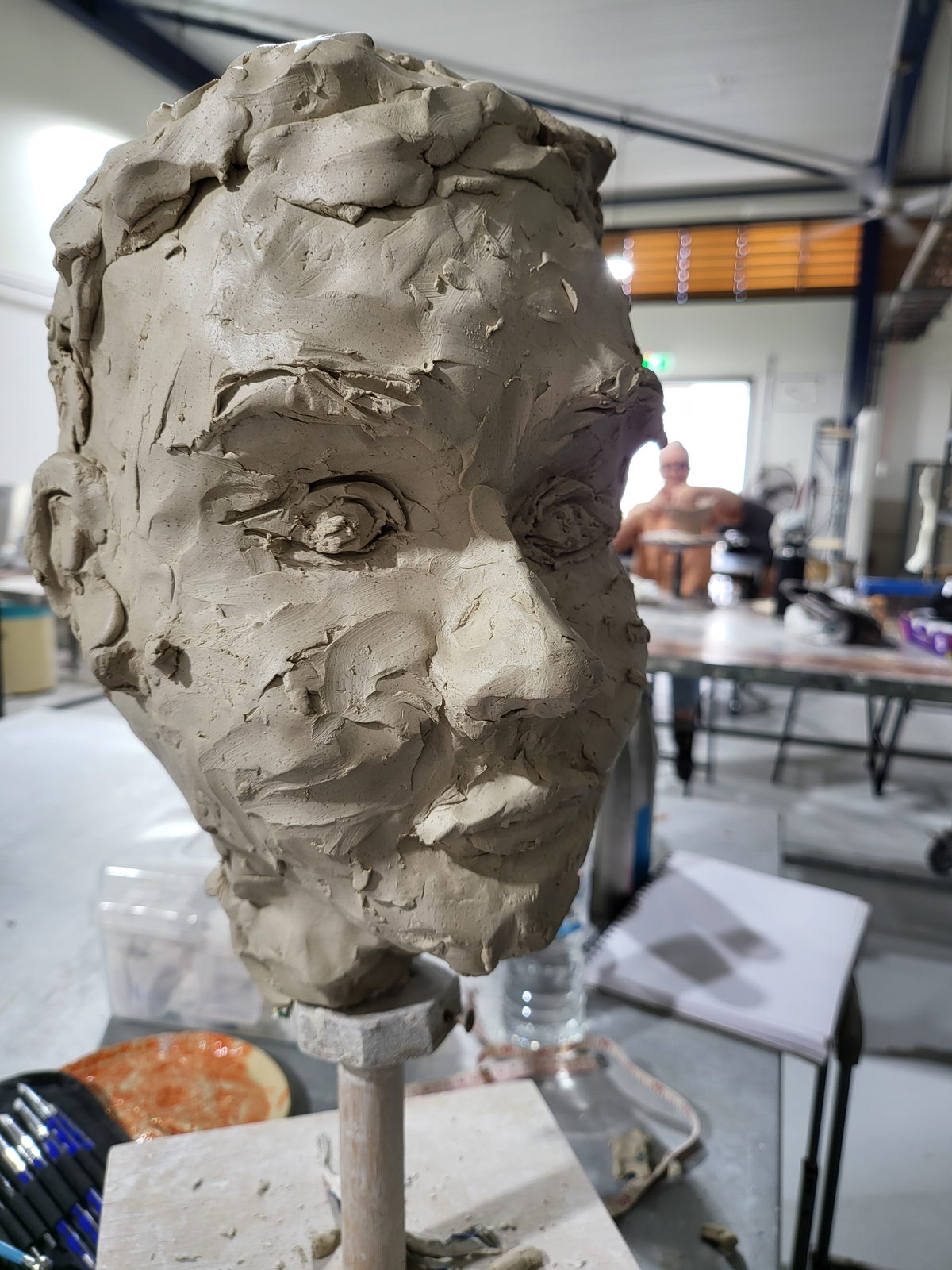
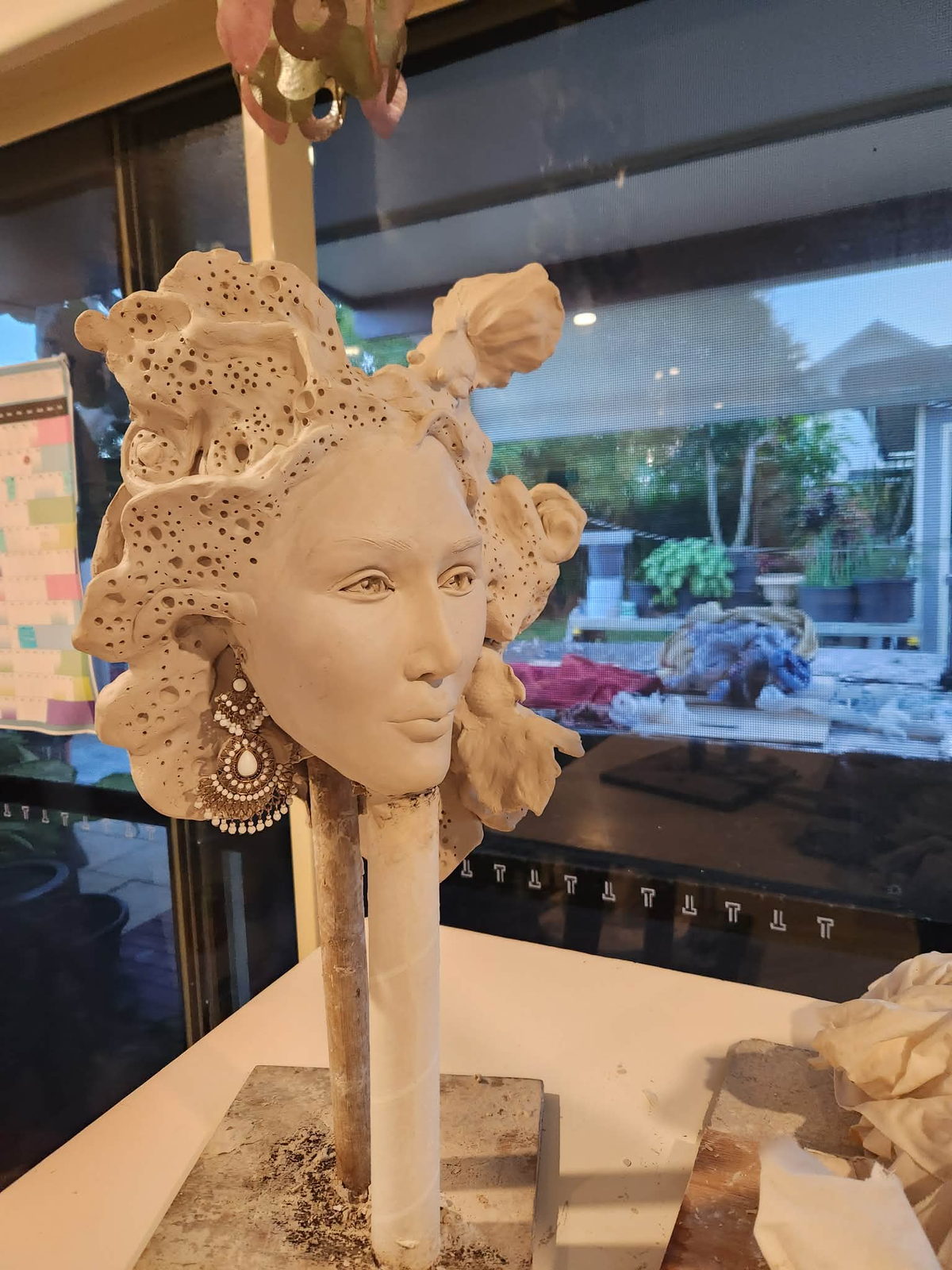
A Little About My Journey
Just three years ago, before I started my Diploma of Visual Art at TAFE Nambour, I had absolutely no idea how to sculpt a human head.
During the one-year course I was introduced to painting, drawing, ceramics, sculpture and art history. It was an incredible introduction to the visual arts, and I am very grateful to my teachers — Andrew Bryant, Kerry Wilson, Jade McCafferty, Carlo de Bono, Trish Fitzgerald, Maddison Hunter and Tess Miller — who brought so much experience and knowledge to the course.
Looking back, I understand that the purpose of the diploma was to introduce us to a broad range of creative disciplines within one year. We were given the opportunity to experience different materials, techniques and ways of working, and to discover which areas interested us enough to explore further.
But when so many different areas of art have to be covered within one year, there is naturally only so much time to go deeply into each one. We were introduced to many techniques and processes and given the opportunity to try them for ourselves, but often there wasn’t enough time to develop a deep understanding or become confident in executing every process.
We were also a class of close to thirty students, which meant that individual guidance naturally had to be shared among many people. Our teachers always did their best to support us individually, while also encouraging us to explore, experiment and develop our own ways of working.
This was particularly true for me with ceramics and sculpture. I was introduced to many different forms of ceramic work, including portrait sculpture, but being introduced to a process is very different from becoming confident in executing it. I began to realise that understanding an idea or seeing a demonstration was only the beginning. The deeper learning came from putting that knowledge into practice — repeatedly.
I remember being introduced to portrait sculpture during my first semester. We were given some helpful notes and an introduction to the process, and from there I began to learn through hands-on experience, observation, repetition and experimentation.
For me, this became a very important part of the learning process. I would try something, look at it, make adjustments, try again, and gradually begin to understand how the different parts of the face relate to one another.
I certainly wasn’t confident at the beginning. For one assessment we were required to make a sculpted head, and I had no idea what I was doing. Most students made one head. I ended up making three.
Looking back, that repetition was one of the best things I could have done. In the second semester, when we had to develop a body of work, I made another four heads. By then I was beginning to understand more about the process — not because I had suddenly learned everything, but because I had spent more time doing it.
I began to understand that sculpting a face isn’t simply about knowing where to put the eyes, nose and mouth. It is about understanding the whole structure of the head, how the different parts relate to one another, and how even a small adjustment can change the entire face.
One of those sculptures cracked in several places. Andrew Bryant, who taught ceramics in my second semester, was able to explain exactly why it had happened. That became another important lesson for me about working with clay: learning not only what to do, but why clay behaves the way it does.
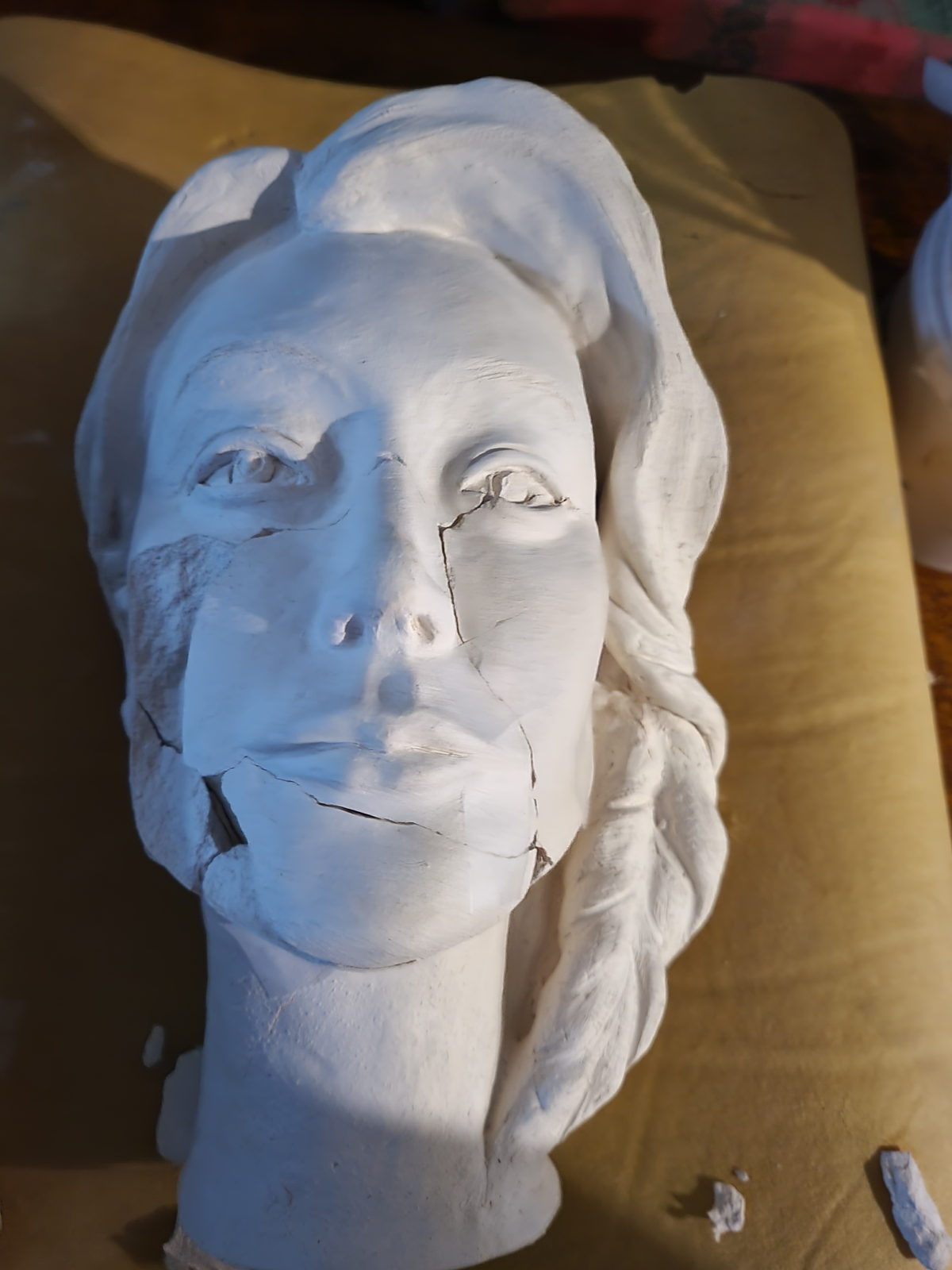
Learning Beyond the Diploma
After finishing the diploma, I kept making sculpture and kept learning as I went. But I was still frustrated. I wanted to understand portrait sculpture more deeply, particularly how to construct and refine the face.
I looked for a practical, hands-on sculpture course on the Sunshine Coast that focused specifically on building a face or a head, but I couldn’t find one. So I turned to online learning.
I worked through a wonderful course by Cristina Córdova, which introduced me to hand-sculpting a hollow ceramic bust using a slab-building technique. Her approach showed me how a relatively simple template of the face and upper torso could be developed by manipulating and pressing the clay, gradually transforming the form into a hollow ceramic bust.
I also studied a master sculpture course by the professional figurative sculptor Amelia Rowcroft. Her approach is more traditional, progressively building the sculptural form from the beginning. Her teaching gave me another perspective on constructing the human head and helped me become much more comfortable with the process. I also became more familiar with using a grid system, which helped me understand proportions and the relationships between the features.
Both approaches were extremely valuable. But they also taught me something else: learning to sculpt takes time, practice and a lot of hands-on work.
A course can show you a process and give you knowledge and techniques, but the real learning happens when you put your own hands into the clay and try to make it work.
I invested quite a lot in my own learning, including more than $800 in one of the sculpture courses, and I continued practising almost every day. The courses gave me knowledge and different ways of approaching the human form, but the real progress came from putting those lessons into practice — making mistakes, trying again, looking carefully, adjusting and repeating.
I learned that there is no substitute for putting in the hours.